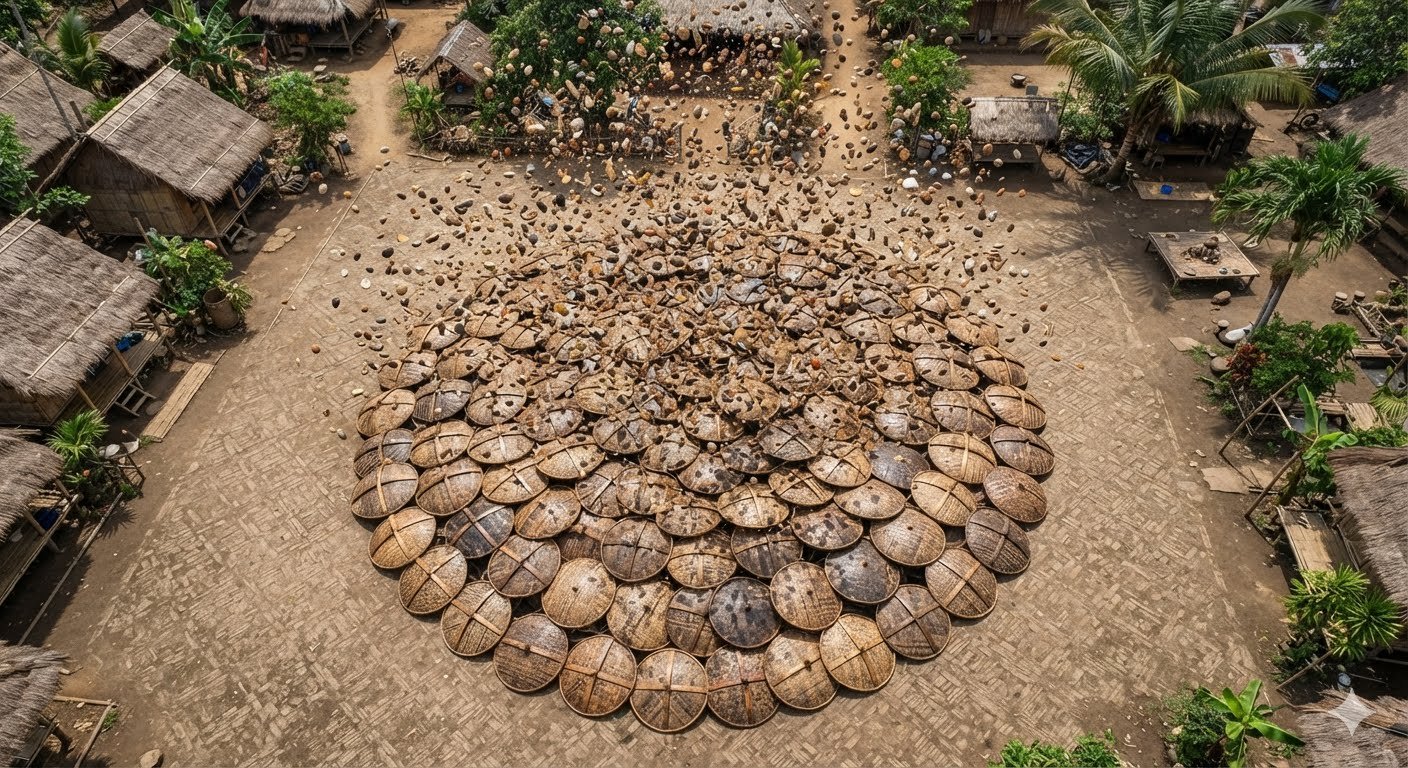
DEVIDHURA, INDIA — A centuries-old religious tradition descended into chaos in northern India after the annual “Bagwal Mela” stone-throwing festival left more than 140 people injured. [1, 2]
Thousands of devotees gathered outside the Maa Barahi Devi Temple in the Champawat district of Uttarakhand to participate in the fierce, time-honored bloodletting ritual. Divided into four distinct clans identified by their white, pink, yellow, and saffron turbans, participants charged into the temple grounds armed with large wooden shields and makeshift protective gear. [1, 2, 3, 4]
According to the temple’s head priest, Kirti Ballabh Joshi, “The ritual lasted eight minutes. It began at 1:48 pm after a conch…” shell was blown to signal the start of the battle.
What followed was an intense, dizzying barrage of flying projectiles. [1]
The roots of the Bagwal festival are deeply tied to local mythology. Legend dictates that a human sacrifice was once required annually to protect the region from demons. Eventually, the presiding goddess, Maa Barahi, offered a compromise: the clans could throw stones at one another until the collective blood spilled equaled a human sacrifice. [1, 2]
Despite a strict 2013 mandate from the Uttarakhand High Court ordering that stones be replaced with hard fruits and flowers like pears and apples, many worshippers bypassed security measures. Local authorities confirmed that a large segment of the crowd resorted to throwing actual rocks, believing that anything short of a bleeding wound would bring misfortune to their community. [1, 2, 3, 4]
According to temple administrators, all the injured were transported to nearby medical facilities and are currently in stable condition. Despite the high number of casualties and minor structural damage, the community remains undeterred, viewing the injuries not as a fiasco, but as a divine blessing.